The journal, stories and advice from our family in Rajasthan
Most of what we know about Rajasthan we learned at the kitchen table: from a grandmother who timed the ghevar by the first rain, an uncle who could name every gate of Mehrangarh, a cousin who married into Udaipur. This journal is where we write it down for you.
Leopards among herders on granite hills, or tigers by the lakes of a royal forest? How the two compare on sightings, seasons, lodges and the kind of traveller each one suits.
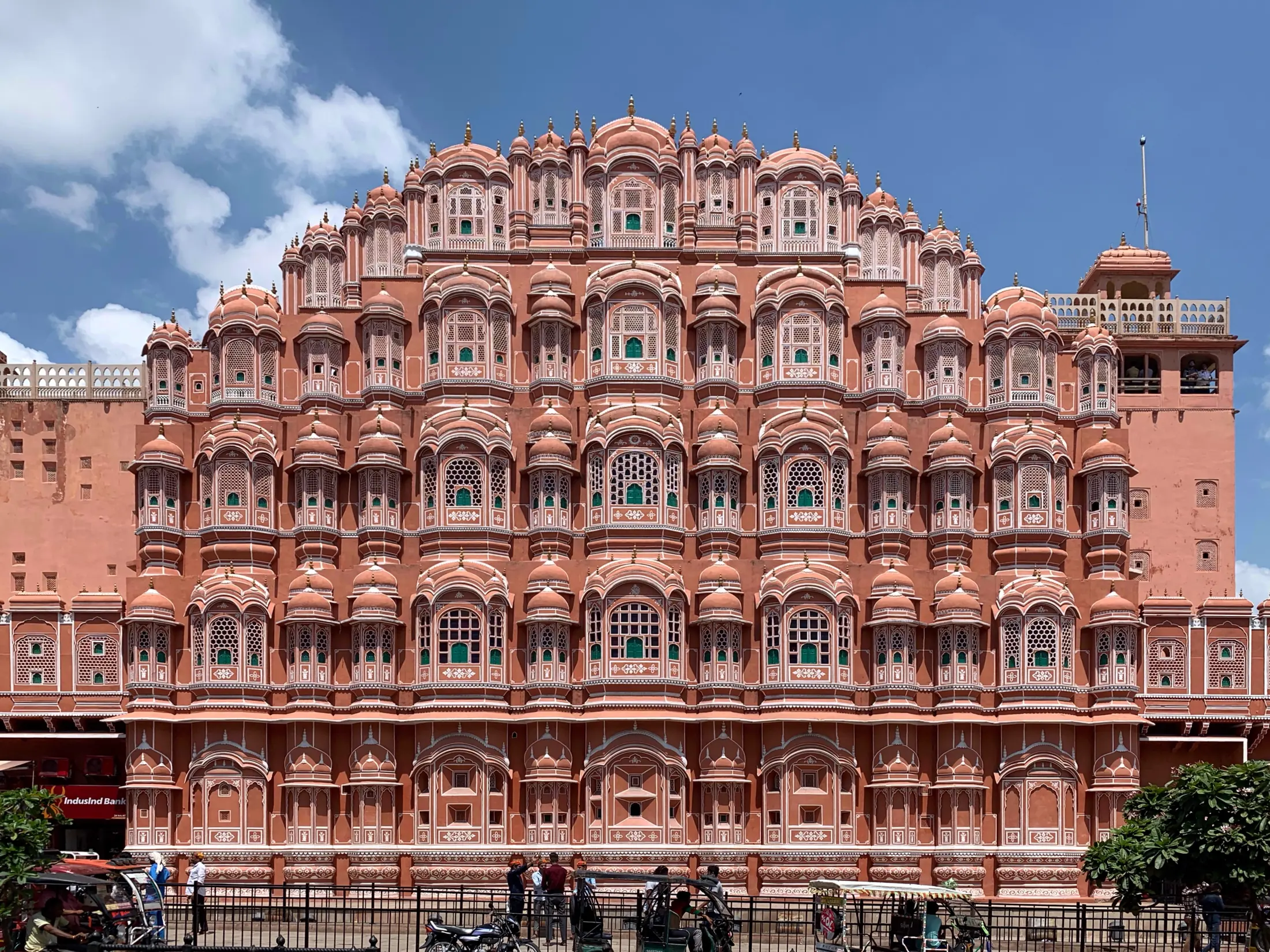
The hours before nine are the best in Jaipur. Temple bells, pigeons at the squares, Hawa Mahal in the first sun, kachori at the counter and Amber with the gates just open.
Thirteen storeys of steps at Abhaneri, a queen's well in Bundi, a jhalra below Mehrangarh. How Rajasthan's stepwells work, which to see, and the hour when their shadows are sharpest.
In 1876 a maharaja washed his capital in terracotta to welcome a prince, and the city never changed back. The story, the myths, the true shade and the hours when it glows.
From Rambagh and the Lake Palace to Umaid Bhawan, Deogarh and Udai Bilas: the palace hotels we book most, what makes each one special, and who it suits.
How many nights, which cities, which season and which mistakes to avoid. The advice our family gives friends planning their first journey through Rajasthan.
Forts with secret stairs, a cannon on wheels, tigers at dawn and a night in the dunes. How we plan Rajasthan for children of every age, and the stories to tell them on the way.
A private boat mid-lake, the palace lights from Ambrai Ghat, the Monsoon Palace on its hill and tea on a palace terrace. Where to watch the sun go down in Udaipur, and when.
Why are the houses below Mehrangarh blue? The theories families tell, what the wash is made of, where the bluest lanes are and the hour when the colour almost glows.
Jaisalmer's fort is not a ruin. Families still live, pray, trade and fly kites inside its walls. Who they are, how their day runs, why the hill is fragile, and how to be a good guest.
The queen of Chittor as Mewar tells her story and as historians read it: the siege of 1303, the poem of 1540, and the pavilion by the water where the legend lives.
The Mewar king who refused Akbar, the battle in the turmeric-yellow pass in June 1576, the horse of the ballads, and how to walk his story from Kumbhalgarh to Udaipur.
Turmeric mornings, a groom with a sword, a brass band in the lane and seven rounds of a sacred fire. A Rajput wedding explained ritual by ritual, with a guest's etiquette.
Six yards, one petticoat, a handful of safety pins and a little patience. Our step-by-step guide to draping a sari, the Rajasthani way to wear the pallu, and what to buy in Jaipur.
A plain street door, a sudden courtyard full of light, painted walls and a roof for summer nights. How a Rajasthani haveli works, where to see the finest and how to stay in one.
A dome on slender pillars, crowning a fort wall or marking where a king was cremated. What a chhatri is, how to read one, and the cenotaph grounds we love at sunset.
A carved stone balcony hung on brackets, a little roof above, a lattice screen in front. What a jharokha is, why queens and kings needed them, and where to see the finest.
Hard wheat rolls cracked open and drowned in ghee, a five-lentil dal and a sweet crumble of jaggery and cardamom. The story of dal baati churma and how our family makes it.
Mutton slow-cooked with yoghurt, garlic and a fistful of deep red Mathania chillies, smoked at the end over a coal. The story of laal maas and how Rajput kitchens make it.
A sour wild berry and the dried beans of the desert's sacred tree, cooked with chilli and mango powder. What ker sangri is, why the Thar treasures it, and how our family makes it.
Ghevar is the lacy, syrup-soaked disc that appears in Jaipur's sweet shops with the monsoon. Its story, how it is fried, the kinds to order and where we buy ours.
The onion-filled pastry that Jaipur and Jodhpur eat standing at a counter at eight in the morning. Its story, the shops we trust, the chutneys and a recipe for home.
Thick, sweet yoghurt in a clay cup with a lid of cream. How Jaipur drinks lassi, the famous counter on MI Road and its look-alikes, and how to enjoy it safely.
A brass plate of small bowls that keep being refilled. What is in each bowl of a Rajasthani thali, the order we eat it in, the manners, and where we take guests for one.
Chai facing Hawa Mahal, sunset over the city from Nahargarh, a family roof in the walled city. The rooftops of Jaipur we trust, the right hour and what to order.
Half of old Udaipur has a terrace over Lake Pichola. Which shore faces the lit City Palace, the rooftops we trust, the hour to arrive and what to order with the view.
Jaipur cuts much of the world's coloured gemstones, and it has a scam as old as the trade. Our family's rules for buying stones and jewellery here, safely and well.
Hand-knotted, hand-tufted or a flat-woven durrie from Salawas? How to read the back of a rug, judge wool and dye, avoid the carpet-factory trap and get it home.
Sanganer florals, Bagru dabu, ajrakh from the far west. How to tell a hand block print from a screen copy, what to buy, how to wash it and where we shop.
Real Jaipur blue pottery is quartz, not clay: light, glassy and painted by hand. How to tell it from factory ceramics, what to buy, and how to get it home in one piece.
What the borla, the aad and the silver hansli mean, how kundan, meenakari and thewa are made, and how to buy gold, silver and gems in Rajasthan without regret.
How Rajasthan's embroidered leather slippers are cut, stitched and decorated, the styles for weddings and every day, where to buy them and how to make a stiff new pair your own.
Why a Rajasthani turban tells you a man's district, community and mood, the honour customs tied up in it, the royal turbans of the courts, and where to see and wear one yourself.
How Rajasthan's wave-patterned tie-dye is rolled, tied and dyed, the patterns and colours to know, why it belongs to the monsoon and Teej, and how to buy the real thing.
Who the Kalbelia are, how their women's dance came from the movement of snakes, the music of the been and dafli, and where to see it with respect and fair pay.
Who the Manganiyars are, the patrons they sang for, the kamaicha and khartal, the songs of desert lovers and saints, its great masters and how to hear it in the right setting.
How the bhopa priest-singers of Rajasthan sing the epics of Pabuji and Devnarayan before a painted phad, how the scrolls are made in Bhilwara and Shahpura, and how to read one.
The story of Rajasthan's string puppets and the Bhat families who carve, dress and voice them, the plays they perform, how to buy a real one and where to see a show worth the evening.
What the great painted cloths behind Shrinathji at Nathdwara mean, how to read their seasons and symbols, how they are painted, and how to choose and buy a real one.
How the Hada rulers of Bundi filled their palace with turquoise murals of Krishna, rain and royal life, how to recognise the Bundi style, and how to see the Chitrashala at its best.
Krishna under the eaves, a steam train over the gate, a gramophone in the courtyard. How to read, date and enjoy the frescoes of Shekhawati's painted towns, and where to find the best.
A young Rudyard Kipling, a lakeside pavilion, a crowded treasury and a palace he thought goblins had built. What he saw in Bundi in 1887, and how to walk in his footsteps today.
From the maharajas' hunting forest to Project Tiger, poaching scares and the tigresses who ruled the lakes. The story of Ranthambore's tigers, how they are counted, and how to see them well.
The most photographed tiger in the world held the lakes below Ranthambore Fort for years, fought a crocodile and founded a dynasty. Her true story, and where the legends begin.
Leopards resting on granite above fields and villages, watched by Rabari herders who have shared the hills with them for generations. How Jawai works, and how to see its cats well and kindly.
A bird as tall as a child, once found across India, now clinging on in the grasslands around Jaisalmer. The godawan's story, the fight to save it, and how to see one without harming it.
Each winter thousands of grey cranes circle down to a walled feeding ground at the edge of a desert village. How Khichan began feeding them, when to go, and how to watch without disturbing them.
Jet-black bucks with spiral horns leaping over golden grass, harriers overhead and not a jeep in sight. The blackbuck of Tal Chhapar, their rut, their threats and how to see them at dawn.
A faith founded on a sand dune in 1485, a village that gave its lives for trees, and fields where antelope still graze without fear. The Bishnoi story, and what it teaches every traveller.
Rajasthan's state animal carried caravans, armies and wedding parties across the Thar. Its breeds, its herders, its great fairs and its sharp decline, and how to meet camels in a way that helps them.
The horse with ears that curve inward until they nearly touch. How the Marwari carried the Rathores to war, nearly vanished, came back, and where you can ride one today.
White jackets, red turbans and a camel herd moving through the scrub at dawn. Who the Rabari are, how their year turns, and how we meet them with respect.
Green hills, brimming lakes, roasted corn on the Fateh Sagar embankment and a palace built to watch the clouds. How we spend the rains in Udaipur, and how you can too.
Sunny days in the low twenties, nights close to freezing and cranes in their thousands. How we travel the Thar in winter, what to pack, and where to sleep under the stars.
Empty palaces, tigers at the water and mangoes in every bazaar. How our family lives through April, May and June, and how to travel Rajasthan in the heat if you must.
The royal bonfire in Manak Chowk, fires in every lane of the old city, then a morning of colour by Lake Pichola. How our family spends Holi in Udaipur, and how you can join in.
The walled city lit end to end, sweet boxes in every hand and fireworks over Hawa Mahal. Our family's practical guide to Diwali week in Jaipur, from Dhanteras to Bhai Dooj.
Which half of the fair to choose, what to pack against the dust, how to talk to a herder and the mistakes most first-timers make. The practical notes we give our own friends.
Moustaches, turbans, racing camels and music under the Magh moon. How to pace the three days, where to stand, what to wear and where to hide when you need silence.
Girls singing at dawn with pots of water, henna on every hand and the goddess carried out through Tripolia Gate. How our family keeps Gangaur in Jaipur, and how to see it well.
On Makar Sankranti the whole walled city climbs onto its roofs and fights in the sky. Our family's guide to kite day: the kit, the words, the food and the manners.
Each monsoon, Teej Mata leaves the City Palace in a palanquin and the walled city turns green. Our guide to the procession, the rainy-season city and how to keep it well.
Rajasthan's oldest luxury train covers eight cities in a week. Our honest view of what it does beautifully, what it rushes, and who should choose a private journey instead.
IRCTC's Maharajas' Express is India's most polished train. How its journeys differ, which cabin to choose, what a day aboard is like, and the nights we add around it.
Fast trains beat the road out of Delhi. The car wins almost everywhere else. Our route-by-route view of when to take each, and how we combine the two on one journey.
About 400 kilometres and six hours, or an hour by air. Our four favourite ways to drive from the Pink City to the lakes, with the forts, temples and palace nights between.
About 340 kilometres and five to six hours, from Dhundhar into Marwar. Our stops at Kishangarh, Ajmer and Pushkar, the desert alternative via Khimsar, and how we time the arrival.
About 285 kilometres and five hours across Marwar into the Thar. Where to break the drive, what to watch for on the way, and how we time the arrival at the golden fort.
Five to six hours of driving through the Aravalli hills, with the marble temple of Ranakpur in a forest valley. Where to stop, where to stay a night, and how to time the day.
About 280 kilometres and four to five hours, sometimes less on the new expressway. How the two roads compare, the stops on each, and when a fast train beats them both.
How we turn the Agra to Jaipur transfer into the best day of a Golden Triangle journey: Akbar's red city, a ninth-century stepwell, mustard fields and the right hour for each.
The dawn visit to the Taj Mahal, planned the way we plan it for our own family: the right gate, the first view through the arch, the colour of the marble month by month.
The Taj Mahal closes to sightseers every Friday for prayers at its mosque. Here is why, what stays open in Agra, and how we reorder a journey so the day becomes a gift.
How we walk Akbar's red sandstone capital: the palaces in the order they make sense, the saint's tomb with its threads of hope, and the quiet corners most visitors never find.
Beyond Jaipur, Udaipur, Jodhpur, Jaisalmer and Pushkar lies the Rajasthan our own family travels: painted palaces, temple towns, water forts and grasslands, region by region.
The forts of Rajasthan that most travellers never see: river forts, mud forts, desert citadels and hilltop ruins, with their stories, the best hour to go and the ones you can sleep in.
Chittorgarh, Kumbhalgarh, Ranthambore, Gagron, Amber and Jaisalmer: why UNESCO listed these six together in 2013, what makes each one different, and a route that links them all.
Our favourite routes along Kumbhalgarh's 36-kilometre wall, from a sunrise hour above the mist to a full day on the ramparts and the forest walk down to Ranakpur.
Our timed plan for one full day at Chittorgarh Fort from Udaipur: the seven gates at opening, the towers in the late morning, the water palaces after the heat and sunset on the western walls.
How to visit the Chaumukha temple at Ranakpur: the merchant's dream behind it, the rules that keep it peaceful, the carvings most visitors miss and the hour when the marble turns gold.
Five Jain temples on Mount Abu, plain outside and carved like lace within. Who built them, which ceilings to find, and how to visit with respect and without the crowds.
Krishna as a boy of seven, woken, dressed and fed in a haveli north of Udaipur, and shown eight times a day. How Shrinathji came to Mewar, and how to visit with grace.
The Sufi shrine where Muslims, Hindus and Sikhs walk to the same tomb with roses. The saint, the gates, the lamps at dusk and how to visit with respect.
Why Brahma, the creator, has only one great temple, and how to visit it: the legend of two wives on two hills, the silver-coin floor and the dawn walk from the ghats.
Why some 20,000 rats are treated as family in a marble temple near Bikaner, and how to visit Karni Mata calmly: the legend, the white kabas, the socks and the dawn hour.
India's most famous 'haunted' fort, told honestly: the curse of the ascetic and the sorcerer as legend, the real history of an Amber prince's town, and the ASI's sunset rule.
A Paliwal village of sandstone streets near Jaisalmer, said to have emptied in a single night under a curse. The legend, the records that tell a slower story, and how to visit.
Sam's tall, famous dunes or Khuri's quiet ones beside a working village? An honest side-by-side from a family that has watched both change, with the hours that make each one magical.
Not every tent in the Thar is a luxury camp. The five kinds of desert camp, the questions we ask before booking one, the red flags, the season and what to pack.
A field guide to the desert night: how to choose your night by the moon, a first star-hop from Orion to the Pole Star, the Indian names of the stars and where we take guests to see them.
A 4 am alarm, a flask of chai and an hour of silence above Amer and the mustard fields. Our honest view of ballooning near Jaipur, and how to get the morning right.
A tweed jacket that came out once a year, tea at the boards and the thunder of hooves beside Rambagh. The story of Jaipur polo, and how to spend a winter afternoon at a match.
The kingdoms ended in 1949 and the privy purses in 1971, yet the flags still fly over the palaces. What Rajasthan's former royal families do today, told through their public roles.
Drinks in a courtyard with the family, dinner by a lamplit stepwell and a dawn ride past Bishnoi villages. What it is really like to stay in a fort where the family still lives.
Thakurs and rawats, garhs and rawlas, tazim and the twelve kotris. A plain guide to the noble estates of old Rajasthan, and the family forts where you can sleep today.
Palaces run by hotel groups, forts run by their own families, havelis with a handful of rooms and new hotels built in old styles. What heritage really means in Rajasthan, and how to choose.
Painted courtyards in Jaipur, a merchant's red sandstone mansion in Bikaner, frescoed rooms in Shekhawati and rooftops under Bundi's palace. Our shortlist of havelis worth a night, and who each suits.
A boat on Lake Pichola at sunset, a tent in the dunes, leopards on granite at dawn and dinner by a lamplit stepwell. Our favourite honeymoon ideas in Rajasthan, and how to fit them together.
A private boat drifting past the City Palace at sunset, a candlelit terrace on Jag Mandir, a hill palace above the valley. Where to ask the question in Udaipur, and how to get every detail right.
Island terraces on Lake Pichola, Mughal lawns in Jaipur, Umaid Bhawan above the blue city and a fort hotel in the dunes. Rajasthan's wedding venues by city and style, and the questions to ask.
Four cities, four colours of light. Our family's take on shooting Rajasthan well: the hours, the months, the manners with people, the places most photographers miss and what to pack.
Where to stand in the Pink City, and when: Hawa Mahal at first light, the painted gates of the City Palace, Amber from the lake, Nahargarh at dusk and the craft lanes of the walled city.
Where to stand in the blue city, and when: Mehrangarh's ramparts at opening, Brahmpuri's indigo lanes, the restored stepwell, Jaswant Thada in the last light and the Clock Tower as it lights up.
The women in our family on packing for Rajasthan: a capsule wardrobe that works in temples, bazaars, jeeps and palaces, what each season asks for, and what to leave room to buy in Jaipur.
A practical, friendly guide to dressing for Rajasthan's sacred places: the outfit that works everywhere, when to cover your head, the Jain no-leather rule, socks on hot marble and the customs of the great temples.
A calm, local guide to tipping on a Rajasthan journey: your chauffeur, guides, naturalists, hotel staff, boatmen and musicians, when to give, how to give it gracefully, and the tipping guide we send you.
Our honest view on safety in Rajasthan: what actually goes wrong, where to read official travel advice, the habits that matter, and how a private driver, local guides and a planner on call reduce the risks.
Ten days is enough for one part of Rajasthan done well. Our family's take on choosing a direction, the route shapes we plan most, honest drive times and where a short flight changes everything.
What a fortnight in Rajasthan really buys you: the Taj, tigers and lakes in one arc, or the desert instead, with honest drive times, the rhythm we plan by and the swaps our guests ask for most.
Delhi, Agra and Jaipur, or the lakes, forts and desert beyond? Our honest comparison of the Golden Triangle and a deeper Rajasthan journey, and the middle paths that give you both.
Forts in the desert, then rice boats on still water. How we pair Rajasthan with Kerala: the order, the months that suit both, the flight south and the nights each half deserves.
Our Kachwaha kings built a palace on the Ganga four centuries ago. How we join Rajasthan to Varanasi: the order, the flight east, the festivals and the nights each end deserves.
The mirror-work of Barmer and the mirror-work of Banni were stitched by cousins. Why we join Rajasthan to Kutch, how we cross the desert, and when the White Rann glows.
A capital on a river bend, an emperor's friend, a murder on the road and a god who would not move. The story of Orchha, and why its forgetting kept it so beautiful.
Kandariya at opening time, the giant boar covered in gods, the Jain temples in the village and a sunset on Vishnu's face. How we see the Chandela temples, group by group.
Tiled ducks and elephants on a palace wall, the world's oldest written zeros and giant Jain figures cut into the cliff. How we walk Gwalior Fort, from the Urwai gate to the ramparts.
Lodhi Garden after the flight, Humayun's Tomb in rose-gold light, Old Delhi at seven in the morning and the Qutub on the road south. Our two-day Delhi, hour by hour.
Nihari by the Jama Masjid at seven, jalebis at the corner of Dariba Kalan, parathas in their own lane and milk foam that melts by noon. The Old Delhi food walk we give our own cousins.
Khanwa and Haldighati, a princess of Amer who became the mother of an emperor, Rajput generals from Kabul to Bengal and palaces that borrowed from each other. Our short history.
The romance every Indian knows from the cinema, and the Amer princess history knows as Mariam-uz-Zamani. Where the name Jodha came from, and where her story still stands in stone.
The general and diplomat who founded Jaipur in 1727, built five observatories from Delhi to Varanasi and asked the sky to agree with his tables. His story, and where to walk it.
Chittorgarh was besieged and taken three times in under three centuries. The rock, the sieges of 1303, 1535 and 1568, and where the legend of Padmini sits among them.
The Guhil and Sisodia rulers of Mewar, who ruled from Chittor and then Udaipur as regents of Shiva. Their great names, their palaces and where to see their public history today.
From Rao Jodha's fort on a bare ridge in 1459 to an art deco palace on Chittar Hill, the Rathores of Marwar and the places in Jodhpur where their story is told.
From the hill fort of Amer to the Chandra Mahal, the Kachwaha rulers who allied with Akbar, founded Jaipur, played polo for the world and still fly a flag and a quarter.
Jodhpur's Bapji came to the title at four, lost its official standing at twenty-three and spent the next half-century turning a fort and a palace into public treasures.
Rajasthani is the language of the desert ballads, the merchant ledgers and our grandmothers' stories. Its dialects, its poets, its long fight for recognition and where travellers hear it best.
Padharo mhare des, welcome to my land: the three words, the desert love song they come from, the singers who carried it and what Rajasthani hospitality feels like in practice.
How the princely states of Rajputana became Rajasthan in seven stages between 1948 and 1956, why 30 March 1949 matters most, and how the state celebrates its birthday.
Water is precious, heritage is fragile and communities are close. Practical ways to travel Rajasthan in luxury while leaving the desert, the forts and the villages better for your visit.
Printers in Bagru, pichwai painters in Nathdwara, weavers at Kaithoon and the embroiderers of Barmer. How we choose the workshops we take you to, and why commission showrooms never make the list.
The elephant ride up to Amber Fort was once the picture of a Jaipur holiday. Here is why we stopped booking it, what we do instead, and where to see elephants without anyone on their backs.
Green forest in October, frosty jeeps in January, flame trees in March and tigers lying in the lakes in May. A month-by-month guide to the right season for Ranthambore and Sariska.
Painted storks on every acacia, pelicans on the open water and a python asleep in the winter sun. A practical guide to birding Keoladeo at Bharatpur, from the right month to the right rickshaw guide.
Officials, maharajas and Gujarati families have all climbed to Mount Abu to escape the heat. The story of Rajasthan's only hill station, its princely summer houses, quiet walks and best seasons.
A fort wrapped by two rivers, a siege remembered in song, a saint who gave up his throne and a town of temple bells. Our guide to Gagron Fort and the quiet country of Jhalawar.
A sari so light you can read the street through it. How the weavers of Kaithoon make Kota Doria's tiny square check, how to tell the real cloth from copies, and how to visit the looms.
A seven-storey palace painted from floor to ceiling, a balcony of English china plates and a pavilion of a single pillar on a still lake. Our guide to the palaces of Dungarpur.
Islands scattered across a reservoir, a goddess with eighteen arms, Bhil markets and the greenest monsoon in Rajasthan. Our guide to Banswara, the city of a hundred islands, and how to plan it well.
A princely capital beneath a ridge fort, a lake palace built for a queen and a tiger forest that lost every tiger and got them back. How to spend two or three days in Alwar and Sariska.
Forts, bazaars and a city that never sits still, or lakes, island palaces and evenings on the water? How Jaipur and Udaipur compare, and who each one suits.
From Mehrangarh on its cliff to the living fort of Jaisalmer and the great wall of Kumbhalgarh: the forts we would never skip, the quiet ones we love, and when to go.
Ghevar in the monsoon, feeni for the kite festival, mawa kachori in Jodhpur and sohan halwa in Ajmer. A family guide to Rajasthan's sweets, the seasons that bring them and where to eat them.
First light on Maota Lake, the walls of Amber reflected in still water, then the mirrored halls before the coaches arrive. How we plan a sunrise morning at Amber Fort.
Forts, palaces and desert colour in the north, or slow water, palms and spice hills in the south? An honest comparison of Rajasthan and Kerala, and the travellers each one suits.
Sunset on the dunes, songs by the fire, a sky thick with stars and tea as the sand turns pink. What a night in a luxury Thar desert camp is really like, and how to choose one.
How to use the journal
Our destination pages tell you what is where. The journal tells you why it matters, when to go and what our family would do. Read it before you plan, and again the night before you arrive.
If you are fixing dates: read the seasons and festivals below, and our festival calendar.
If you are already booked: the food, craft and etiquette pieces make every day richer.
How we write: in our own voice, with dates and names we have checked. Where a story is legend, we say so and give the historical view.
What we leave out: prices, opening hours and anything else likely to change. We confirm those for you when we plan.
Local tip
Read one history piece before you visit each fort. A siege, a queen or a king's name turns a wall into a story, and your guide will love you for asking.
Cities and towns
Every Rajasthani city has its own colour, its own hour and its own temperament. These are the portraits we would give a friend before they arrive.
A writer in Bundi: the town Rudyard Kipling saw, in Kipling in Bundi.
Local tip
For the Mewar house, the headship has been publicly disputed since 2024. Our pieces describe the family's public history and take no side.
Language and identity
The fastest way into a Rajasthani heart is a word in its own language. These short pieces explain the words and the pride behind them.
The language: the dialects of Marwar, Mewar, Dhundhar and Hadoti, and a few phrases that open doors, in the Rajasthani language.
The welcome: the song line every Rajasthani knows, padharo mhare des, and what it truly means, in padharo mhare des, meaning.
The state's birthday: how Rajasthan marks its founding each spring, in Rajasthan Day.
The greeting: if you learn only one word, make it khamma ghani, the Rajasthani hello. Our words and phrases guide has more.
Food, sweets and recipes
Our kitchen grew up without rain, so it learned to work wonders with ghee, millet, gram flour and dried desert beans. These are the dishes we cook at home and the places we queue for them.
Breakfast is the meal visitors miss. Kachori, jalebi and lassi are morning food, and by lunchtime the best counters have sold out.
Crafts, dress and shopping
Jaipur is where Rajasthan comes to shop, and the whole state is a workshop. These guides help you buy well, from makers, without a single commission showroom.
The people behind it: the printers, potters and painters we take guests to, in artisans we work with.
How to shop: our shopping guide explains fair prices, fakes and the drivers who are paid to steer you.
Music, painting and performance
Rajasthan's arts were never only for palaces. Singers, dancers, storytellers and painters travelled from village to village, and many families still do.
Visitors are often surprised by how wild Rajasthan is. Tigers below a fort, leopards among herders, cranes fed by a village. These pieces tell the animal stories, and the human ones.
Read the animal piece before your safari, not after. Knowing which tigress holds which lake turns every drive into a story.
The desert, the sky and the camera
The Thar is not empty. It is a place of villages, music, camels and the clearest night skies in Rajasthan. These pieces help you spend your desert hours well.
Rajasthan changes completely with the calendar. A city in kite season is not the same city in the monsoon. Most festivals follow the lunar calendar, so we confirm the dates each year.
In Rajasthan the drive between cities can be the best part of the day, if you know where to stop. These pieces cover the roads, the trains and how long to give the whole journey.
No prices or opening hours: they change too often. We confirm them when we plan your journey.
Questions about Journal
These are the questions our guests ask before they come. If yours isn't here, a planner in Jaipur will answer it within a day.
Where should I start if I am new to Rajasthan?
Start with our first time in Rajasthan piece, then read the comparison pieces for the places you are considering, such as Jaipur or Udaipur. Add the season or festival for your dates, and the food and etiquette pieces before you fly.
Who writes the journal?
Our family and planners, who live in Rajasthan and travel it every season. We write in our own voice about the places, food and customs we know, and we check dates, names and distances before we publish.
Does the journal include recipes?
Yes. We share family recipes such as dal baati churma and laal maas, with the story of each dish, the ingredients, the method and where to eat it in Rajasthan. Our sweets, thali and kachori pieces cover the rest of the table.
Do you write about places outside Rajasthan?
Yes, the neighbours most journeys include: Delhi, Agra and the Taj Mahal, Fatehpur Sikri, Orchha, Khajuraho, Gwalior, Kutch and Varanasi. We also explain how Rajasthan compares with, and combines with, Kerala.
Are the legends in the journal historically true?
We tell legends such as Padmini of Chittor, the curse of Bhangarh and the abandonment of Kuldhara as legends, the way Rajasthan tells them. Beside each, we give what historians know, so you can enjoy the story and the history together.
Can you plan a journey around a journal piece?
Yes. Many guests send us a piece they loved, such as a desert camp night or sunrise at Amber, and we build the journey around it. Speak to a local planner and we will shape the route, stays and timing with you.
Why don't you give prices or opening hours?
Because they change often, and an out-of-date price or time can spoil a day. We confirm current details when we plan your journey, and our planners stay in touch on WhatsApp throughout.
Keep exploring
Places and journeys that sit naturally alongside this one on a single trip.
Written and checked by our Jaipur team, last updated 2026-10-16.
आपकी यात्रा
Tell us how you like to travel, and we'll draw you a Rajasthan
There's no booking engine and no fixed package. A planner from our Jaipur team will reply within a day with ideas, honest advice on timing and a few questions. Nothing is booked until every detail is right.